Outside Hitter Volleyball Rotations
Map the outside hitter through serve receive, front-row swings, blocking, and legal back-row attacks across all six rotations.
Use the lineup generator with the volleyball rotation simulator overview. Compare middle blocker rotations and plan evaluations with the volleyball tryout planner.
The Outside Hitter’s Position in Each Rotation
The outside hitter is usually a heavy serve-receive player and a primary attacker when front row on the left pin. Systems vary, but most teams ask the OH to take a large share of passing from zone five or six depending on rotation and stack. At the serve they must stay legally aligned with neighbors in the same row and with their front-back partner.
Across Rotations I–VI, the OH occupies each zone in turn as the team rotates clockwise after sideouts. Front-row phases emphasize left-pin attack and blocking; back-row phases emphasize passing lanes, perimeter defense, and transition hitting. Mapping all six prevents surprises about who covers the deep corner versus who releases first on serve receive.
Visualize OH Rotations With the Simulator
Enter your roster in the lineup generator or game plan tool. Walk rotation by rotation to show the OH when they pass, when they block, and when they can pipe from the back row. Adjust serving order to keep the outside near comfortable seams without breaking overlap rules.
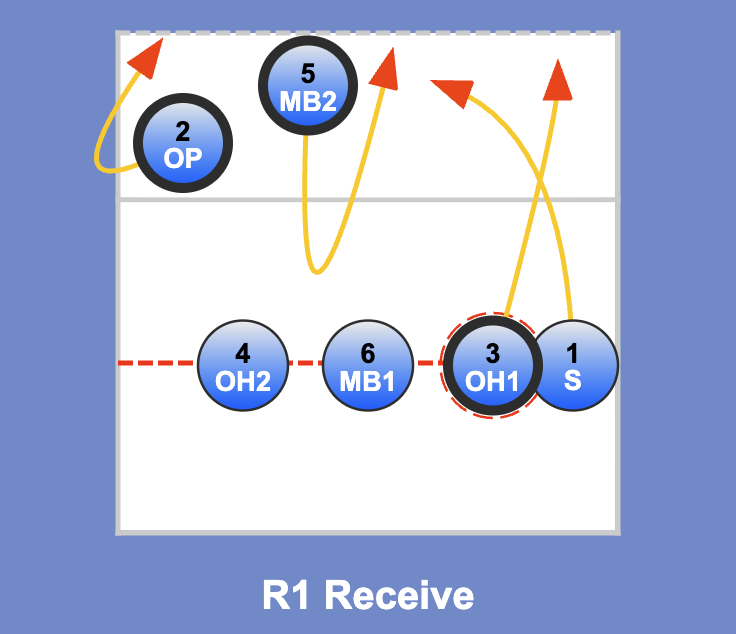
Outside Hitter in the 5-1 System
In a 5-1 rotation, one setter leads every phase, so your outside builds rhythm with the same distributor and consistent play calls. The OH still cycles through three front-row and three back-row rotations; the key is how stacks pair them with the libero and the second pin for serve receive.
When the setter is back row, three front-row attackers pressure the block; when the setter is front row, release patterns change but the outside’s seam responsibilities remain tied to serving order.
Outside Hitter in the 6-2 System
In a 6-2 rotation, two setters alternate back-row setting duties, which shifts who is front row with your outside in certain phases. Passing lanes may look different when the active setter rotates, so rehearse each snapshot on a lineup diagram.
The OH’s core jobs—terminal side, primary passer, perimeter defender—do not change, but communication about emergency sets and out-of-system attacks should be explicit because two athletes may run the offense.
Overlap Rules for Outside Hitters
From the back row, the outside may attack when the play satisfies back-row attack rules: in particular, no attack hit completed on a ball entirely above the net from on or inside the attack line. Coaches should teach footwork that keeps takeoffs clearly behind the line on pipes and high balls.
Stacks must preserve legal front-back and left-right order at the serve. After contact, release routes to passing or attacking should be drilled so the OH does not collide with the libero or adjacent pin.
Frequently Asked Questions
Where does the outside hitter play in volleyball?
The outside hitter rotates through all six positions like any other starter. When front row on the left pin they usually attack and block the opponent’s right-side attacker. When back row they often take a large share of serve receive, defend the perimeter, and may score on pipes or high balls from behind the attack line when back-row attack rules are satisfied. Serving order determines which rotation begins in zone one for the serve, so the outside’s passing seam and blocking assignment shift each phase. Stacks can hide the OH near zone five or six before the serve as long as overlap rules stay legal.
What row does the outside hitter serve from?
The outside serves from zone one whenever they are the next server in the rotation order, just like any other player. That means they may serve from the back row in some rotations and from the front row in others depending on where they sit on the lineup card when it is their turn. After a sideout on the opponent serve, the team rotates clockwise before the next server steps to the end line. Mapping your roster in a simulator shows exactly which rotations put your OH in zone one versus passing in five or six.