Libero Volleyball Rotations and Substitution Rules
Learn how the libero moves through back-row rotations, what the role can and cannot do, and how to line up replacements without breaking overlap rules.
Use the volleyball lineup generator with the rotation simulator overview. Read outside hitter rotations and middle blocker rotations for complementary pin and middle plans.
What Makes the Libero’s Rotations Unique?
The libero is a defensive specialist tracked separately on the scoresheet even though only six players occupy the court at once. Replacements use libero replacement procedures rather than regular substitution counts in most codes, but exchanges must still be orderly and visible at the replacement zone.
The libero strengthens passing and perimeter defense while rotational positions for the six starters continue to advance after sideouts. Replacement mechanics, redesignation, and scorebook entries follow the rulebook your competition uses. Keep printed summaries nearby so staff apply the same steps every match.
Libero Substitution Rules Explained
The libero enters and exits for a designated back-row player through the libero replacement zone following the procedure your rulebook describes. The libero cannot begin a rally as a front-row player; if rotation would put the libero in the front row, the replaced player typically returns and play continues with the standard six.
Build your starting six in the lineup generator or game plan, then talk through where the libero enters relative to each rotation. Players see which back-row athlete the libero replaces first and how the pattern continues as the team rotates clockwise.
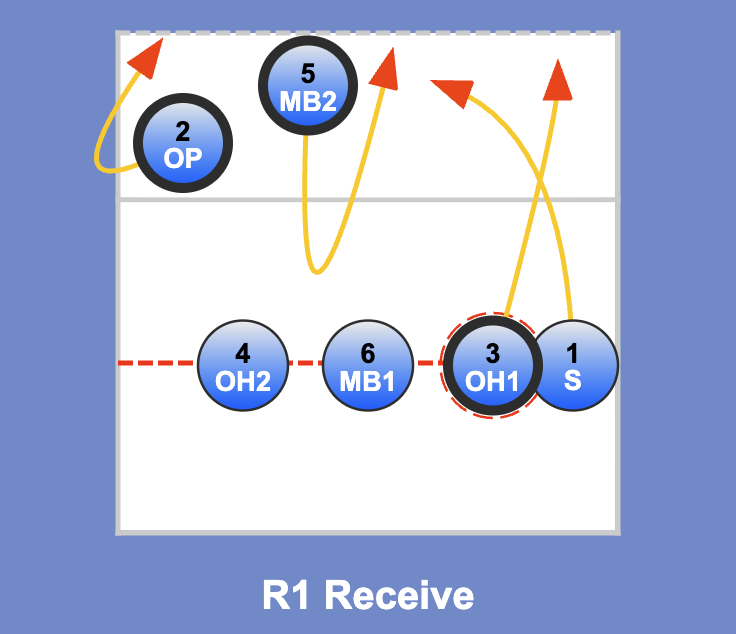
Where the Libero Plays in Each Rotation
The six starters rotate through zones 1–6; the libero’s court time tracks whichever back-row player they replace in each phase of the match. As rotations advance, different starters move into the back row, so the libero’s relative position to the net and to passers shifts even though the libero remains a back-row specialist.
Rotation I–VI: Map each phase in the simulator to show athletes when the libero anchors serve receive versus when they pursue perimeter defense after the pass.
Libero Restrictions — What They Can and Cannot Do
Standard indoor volleyball rules prohibit the libero from blocking or completing an attack hit on a ball that is entirely above the top of the net at the moment of contact. Overhead finger sets that produce an attack on an entirely above-net ball from the libero’s attacking zone are more restricted than similar plays from other players.
Replacement procedures do not excuse illegal stacks at the serve: the six starters must still be legally aligned before the whistle. After serve contact, release patterns for passers and the libero should be drilled so communication stays loud and simple.
Frequently Asked Questions
Does the libero rotate in volleyball?
The libero is not a separate seventh rotation slot. The team still has six players on the floor who rotate through all six positions after each sideout on the opponent serve. The libero enters and exits for a designated back-row player using libero replacement rules, so the player wearing the libero jersey follows that back-row role through the rotation cycle. If the libero would become a front-row player, the replaced athlete typically re-enters and normal rotation continues. Your lineup diagram should show the starting six first, then note which back-row position the libero tracks so everyone sees the same picture.
Can the libero serve in volleyball?
Serving rights for the libero depend entirely on which rulebook governs your match. Under FIVB international rules the libero generally does not serve. USA Volleyball domestic rules have allowed a designated libero to serve in one rotational position for one specific player when that option is elected on the lineup sheet. National Federation high school rules have historically prohibited the libero from serving in high school competition. Because codes change on a cycle, confirm the current language with your assigner or athletic director each season rather than assuming last year’s interpretation still applies.
How many times can a libero substitute per set?
Libero replacements are not counted like regular team substitutions in most indoor codes. Instead, the libero may enter and re-enter for the same back-row player repeatedly when each exchange follows the replacement zone procedure and any redesignation rules after injury. There is usually no small fixed number such as three per set; the limit is procedural, not a hard tally. High school, club, college, and international books phrase the details differently, so keep a printed summary for your level. Officials and scorekeepers track compliance at the table.