Middle Blocker Volleyball Rotations
Track your middle blocker through every rotation: front-row blocking and quicks, back-row responsibilities, and how to stay legal at the serve.
Pair this guide with the volleyball rotation simulator overview and the lineup generator. Compare pin roles on the outside hitter rotations page and defense on the libero rotations page.
The Middle Blocker’s Role in Each Rotation
The middle blocker rotates through positions 1–6 like teammates. When front row, they anchor blocking schemes and run quicks and slides. When back row, they pass, defend, and may attack only under back-row attack rules. Back-row players may not block or complete a block.
How to Visualize MB Rotations With This Simulator
Use the lineup generator or game plan to place your MB with pins, setter, and libero pattern. Step through each rotation to show athletes when the middle is at the net versus in the back row and how serving order shifts those windows.
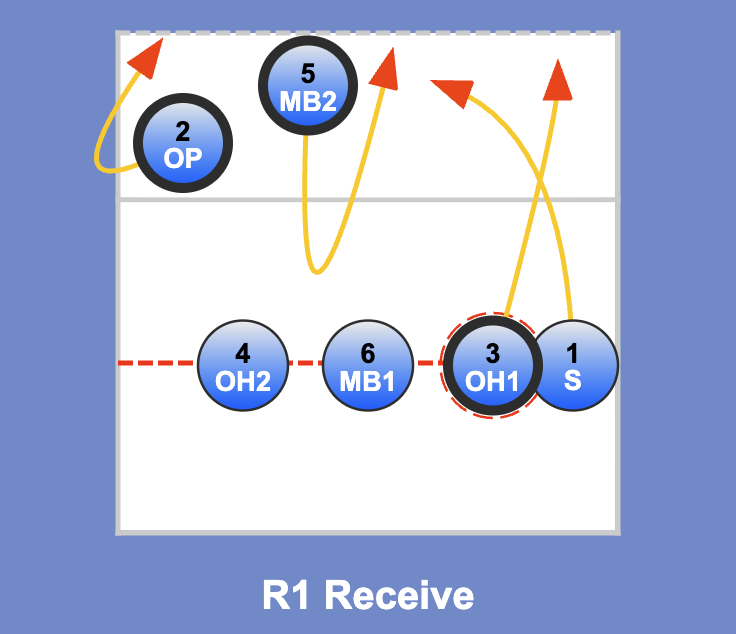
Middle Blocker Positioning by Rotation Number
In each rotation the MB occupies one of the six zones on the lineup sheet. Front-row rotations are blocking and attack phases; back-row rotations shift focus to passing, defense, and legal back-row attacks.
Rotation I–VI: As the team rotates clockwise after sideouts, the middle cycles through each starting relationship to the net. Mapping all six avoids surprises about when your MB hits a quick versus when they chase a pipe in the back row.
Common Middle Blocker Overlap Mistakes
Middles often drift too close to the net before the serve or lose left-right order with adjacent pins when hiding in a stack. At the serve, each front-row player must be closer to the net than the back-row player directly behind them, and teammates in the same row must stay in correct side-to-side order.
After serve contact, release routes to blocking and attack lanes open up. Back-row middles may not block or complete a block and must take off from behind the attack line to attack a ball entirely above the net. Rehearsing stacks on a diagram prevents cheap overlap faults.
Middle Blocker in the 5-1 vs 6-2 System
In a 5-1 rotation, one setter leads every phase, so your middle builds rhythm with the same distributor all match. In a 6-2 rotation, back-row setting alternates between two setters, which can change release timing and who is front row with the MB in each rotation.
Either way the middle still cycles through three front-row and three back-row rotations per full turn. Use serving order and stacks to time when your best blocker faces an opponent’s hot hitter, and follow substitution or libero replacement rules from your league when swapping the MB in the back row.
Frequently Asked Questions
Where does the middle blocker play in volleyball?
The middle blocker rotates through all six positions like every other starter, so their court location changes after each sideout on the opponent serve. When front row they are usually associated with zone three for blocking and quick attacks, though serving order determines the exact starting spot each rotation. When back row they pass, defend, and may attack only under back-row attack rules; they may not block or complete a block from the back row. Many programs substitute or use libero replacements when the MB moves to the back row at higher levels, following the substitution rules that govern your league.
How many rotations does a middle blocker play front row?
In a standard six-player rotation cycle, each athlete is front row for three rotations and back row for three rotations over a full turn through the order. That means your middle will spend three rally phases starting as a front-row player before the cycle repeats, assuming they stay on the court without injury substitutions. Serving order only shifts which three rotations those are relative to the opponent matchup. Mapping all six in a simulator shows exactly when your MB is at the net for blocking and quicks versus chasing balls in the back row.
What is the middle blocker's role in a 5-1 rotation?
In a 5-1 the middle works with one setter who runs the offense from every rotation, so timing between MB and setter on quicks, slides, and out-of-system plays is constant. When the MB is front row they anchor blocking schemes and run fast combinations while the setter is either at the net or releasing from the back row to set. When the MB is back row they contribute to passing and defense and must respect back-row attack limits. The role does not change the six-position rotation; it only changes which three rotations are blocking phases for that athlete.