5-1 Volleyball Rotation Simulator
The 5-1 offense pairs one setter with five attackers who rotate through all six positions. Learn how the system works, how USA Volleyball overlap rules keep your lineup legal at the serve, and how to connect the ideas to a visual practice plan.
For a different two-setter approach, see our guide to the 6-2 rotation. For big-picture rotation teaching and diagrams, explore our volleyball rotation simulator overview, then use the volleyball rotation app for full lineup workflows.
What Is the 5-1 Rotation in Volleyball?
In rotation terms, your team still cycles through the six positions on the floor in clockwise order whenever you win a rally on your opponent’s serve. The phrase 5-1 names your offensive system: five players who are primarily hitters and one player who is the designated setter in every rotation. Many coaches build the serving order with the setter opposite the outside hitter so attacking and passing balance across rotations, though your lineup may differ.
That single setter contacts the second ball whenever your team is in system, whether they start the point in zone 2, 3, or 4 as a front-row player or in zone 1, 5, or 6 as a back-row player. The other athletes fill roles such as outside hitter, middle blocker, opposite, libero or defensive specialist, and serving specialists according to your roster and substitution rules.
When the setter is back row, you typically have three traditional front-row attackers at the net; the setter sets from behind the attack line and must respect back-row attacking limits on balls entirely above the net. When the setter is front row, they block and attack as well as set, and coaches adjust who takes the second ball if the setter is pulled into pass or dig.
How to Use This 5-1 Rotation Simulator
Open the lineup generator or your signed-in game plan workspace. Enter your six starters in serving order, assign the setter and hitters, then step through each rotation. The tool shows how players move clockwise after sideouts and highlights illegal overlaps at the serve so you can fix stacks before practice or matches.
Save or share the visual with assistants and players so everyone sees the same picture of front-row versus back-row windows. Compare alternatives—such as hiding a weaker passer or timing a middle’s front-row run—without erasing a whiteboard between ideas.
Try the Rotation Simulator
Rotate123’s interactive tools are the simulator for building legal lineups: drag players, see all six rotations, and catch overlap issues before game day. There is no separate embed on this page—open the lineup builder or signed-in game plan workspace to model your 5-1.
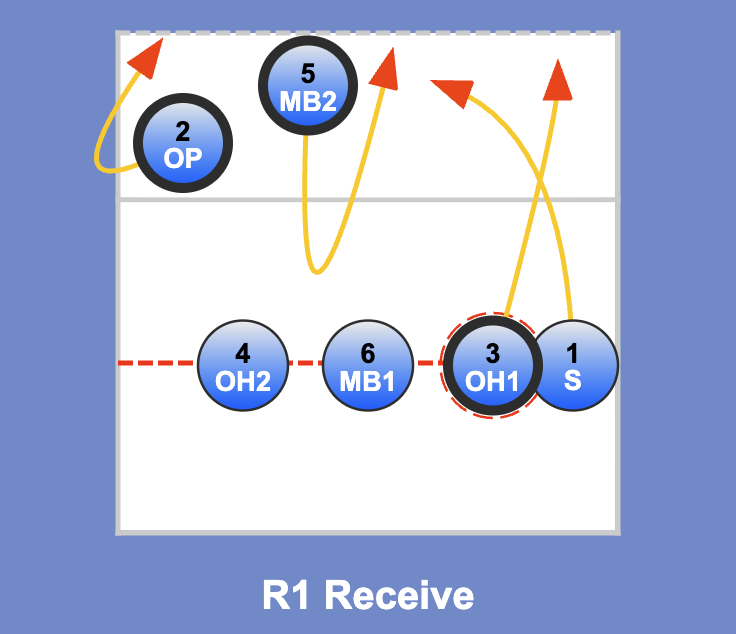
Visual lineup builder: plan 5-1 rotations and validate overlap relationships.
5-1 Rotation Positions by Rotation Number
Rotation numbers describe your team’s position on the court relative to the net and server, not a single fixed spot for each jersey. In a 5-1, the setter still visits every zone 1–6 over the course of a set; what changes each rotation is whether the setter is front row or back row and which three players share the front row with them.
Rotation I: One starting alignment on the lineup sheet; verify front-back and left-right overlap pairs before the serve.
Rotation II–VI: Each sideout on the opponent’s serve moves your team one step clockwise. After six such rotations, the same serving order pattern repeats. Map your setter and pins through all six so passers know their seams and blockers know their matchups every phase.
Use the simulator to label who is in each zone at the serve for your roster; the legal shape is the same in every rotation, only the names in each box change.
5-1 Rotation Rules and Overlap Basics
Standard indoor rules require legal alignment at the moment of the serve. Front-row players must be closer to the net than the back-row players directly behind them (left, center, and right pairs). Within each row, players must maintain correct left-to-right order relative to one another.
After the ball is contacted for serve, players may move into receive patterns, defensive bases, or transitions. Teaching athletes to verify these relationships on the lineup card before stepping on the floor prevents unnecessary overlap faults. Rulebooks and local leagues phrase details in their own words, but the front-back and left-right relationships are the core checks coaches teach every season.
When Should You Use the 5-1 System?
Programs pick a 5-1 when they want one primary decision-maker distributing the ball all match long. Hitters learn one tempo map, one verbal system, and one leader to look at between rallies.
Compared with a 6-2 rotation, you trade the constant three-front-row-attacker look that comes from back-row-only setting for setter consistency. Your roster—not a generic ranking of systems—should drive the decision. Younger groups sometimes start in a 4-2 or 6-2 before moving to a 5-1 when one setter is ready to run the full match.
Frequently Asked Questions
What is a 5-1 rotation in volleyball?
A 5-1 system uses one designated setter and five primary attackers who rotate through all six positions on the court. The setter runs the offense in every rotation, taking the second ball when your team is in system from both the front and back row. The five attackers focus on scoring, blocking, passing, and defense according to your lineup. Coaches often place the setter opposite the outside hitter in serving order for balance, but the pattern follows your roster needs. Standard overlap rules still apply at the moment of the serve before anyone transitions.
Where does the setter go in a 5-1 rotation?
The setter moves through every zone like any other starter. After each sideout on the opponent serve, the team rotates clockwise, so the setter cycles through all six positions over the course of a set. For three rotations they are front row, commonly aligned in zones two, three, or four at the serve depending on your starting order. For three rotations they are back row in zones one, five, or six. The key idea is that one athlete always runs the offense while their court location changes. Use a lineup simulator to see the exact path for your serving order.
What is the difference between a 5-1 and 6-2 rotation?
A 5-1 keeps a single setter on the floor for the entire match who sets from every rotation. A 6-2 typically uses two setters who share duties, usually setting from the back row while the other plays as a front-row attacker when it is their turn. Both systems still use six rotational positions and the same overlap checks at the serve. Teams pick 5-1 when one setter is clearly the best distributor; they pick 6-2 when two athletes can both set and hit at a competitive level. Your roster depth should drive the choice.
How many hitters are in a 5-1 volleyball rotation?
The name refers to five attackers and one setter. In practice the setter can also score when they are front row, but the system is built around five players who are primarily terminal options while one player leads setting decisions. When the setter is back row, you usually show three traditional front-row attackers at the net. When the setter is front row, they join the net offense within normal hitting and setting rules while the other athletes fill their roles. The count describes roles, not a limit on who may occasionally attack.
Related Rotation Systems
Plan your 5-1 with Rotate123
Build every rotation visually, catch overlaps early, and share diagrams with your team.