6-1 Volleyball Rotation Simulator
The 6-1 labels a single-setter system where six players are counted as attackers in the scheme and one setter runs the offense from every rotation—including as a front-row attacker on some points and a back-row distributor on others.
Compare the closely related 5-1 rotation, the two-setter 6-2 rotation, or the beginner-friendly 4-2 rotation. For full-court teaching tools, see the volleyball rotation simulator overview.
What Is the 6-1 Rotation?
Your team still rotates clockwise through positions 1–6 after sideouts on the opponent’s serve. The 6-1 name emphasizes roster philosophy: one athlete is the designated setter while everyone else is developed as a scoring or terminal threat in the system.
In practice, many coaches use 5-1 and 6-1 interchangeably for the same on-court structure—a single setter who sets from both rows. Materials may differ by region or publisher, but the lineup pattern is the same: one playmaker, six rotational slots, continuous responsibility for running the offense.
How to Use This Simulator
Open the lineup generator or game plan workspace. Enter serving order, lock in your setter, then advance rotation by rotation. You will see when the setter is front row versus back row, which three players share the net, and whether your stack is legal at the serve.
Use the same visual in pregame meetings so passers, hitters, and the setter share one reference for releases and seams.
Try the Rotation Simulator
Enter your lineup in Rotate123 to visualize every 6-1 rotation, check overlaps, and export diagrams for staff and players. The public lineup generator is free; the member game plan adds deeper workflow for recurring teams.
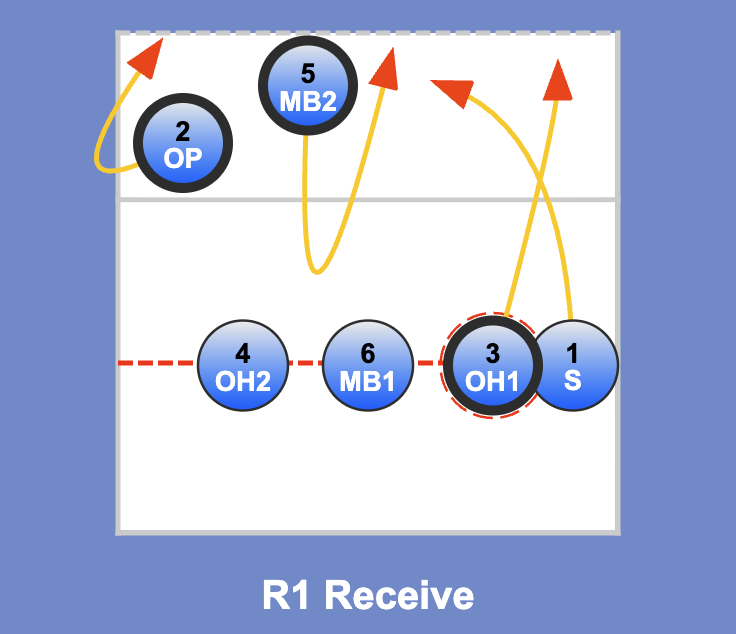
Plan 6-1 rotations visually and validate overlap before matches.
6-1 vs 5-1: Key Differences
For most coaches, 6-1 and 5-1 describe the same lineup: one setter runs the offense from every rotation while rotating through all six zones. Some textbooks use 6-1 to count six attackers plus one setter in the system diagram, while others say 5-1 to count five hitters plus one setter. On the floor, rotation timing, overlap rules, and back-row attack limits for the setter are identical either way.
At the serve, front-row players must stay closer to the net than the back-row players directly behind them in each column, with correct left-to-right order in each row. After serve contact, players transition into receive and defense. A back-row setter must respect back-row attack rules on balls fully above the net. Advanced teams adopt this single-setter pattern when one distributor is clearly the best fit; if you need two setters to share time, consider a 6-2 or beginner 4-2 until one athlete can own the match.
Frequently Asked Questions
What is a 6-1 rotation in volleyball?
A 6-1 system describes one setter who runs the offense from every rotation while six players rotate through the court as attackers in the scheme. In practice many coaches use the term interchangeably with a 5-1, because both mean a single primary distributor moving through all six positions. When the setter is back row, three teammates hold the front-row attacker roles at the net. When the setter is front row, they may block, set, and attack within normal rules while others fill their assignments. Overlap rules at the serve are the same as any other offense.
How is the 6-1 different from the 5-1?
On the court the two labels usually describe the same structure: one setter sets from both rows for the entire match. Some materials use 6-1 to emphasize six attackers plus one setter in the system diagram, while 5-1 counts five hitters plus one setter. Rotation, overlap checks, and substitution rules do not change between the names. If a coach mentions both terms in one sentence, they are almost always talking about the same lineup pattern rather than two different offenses.